


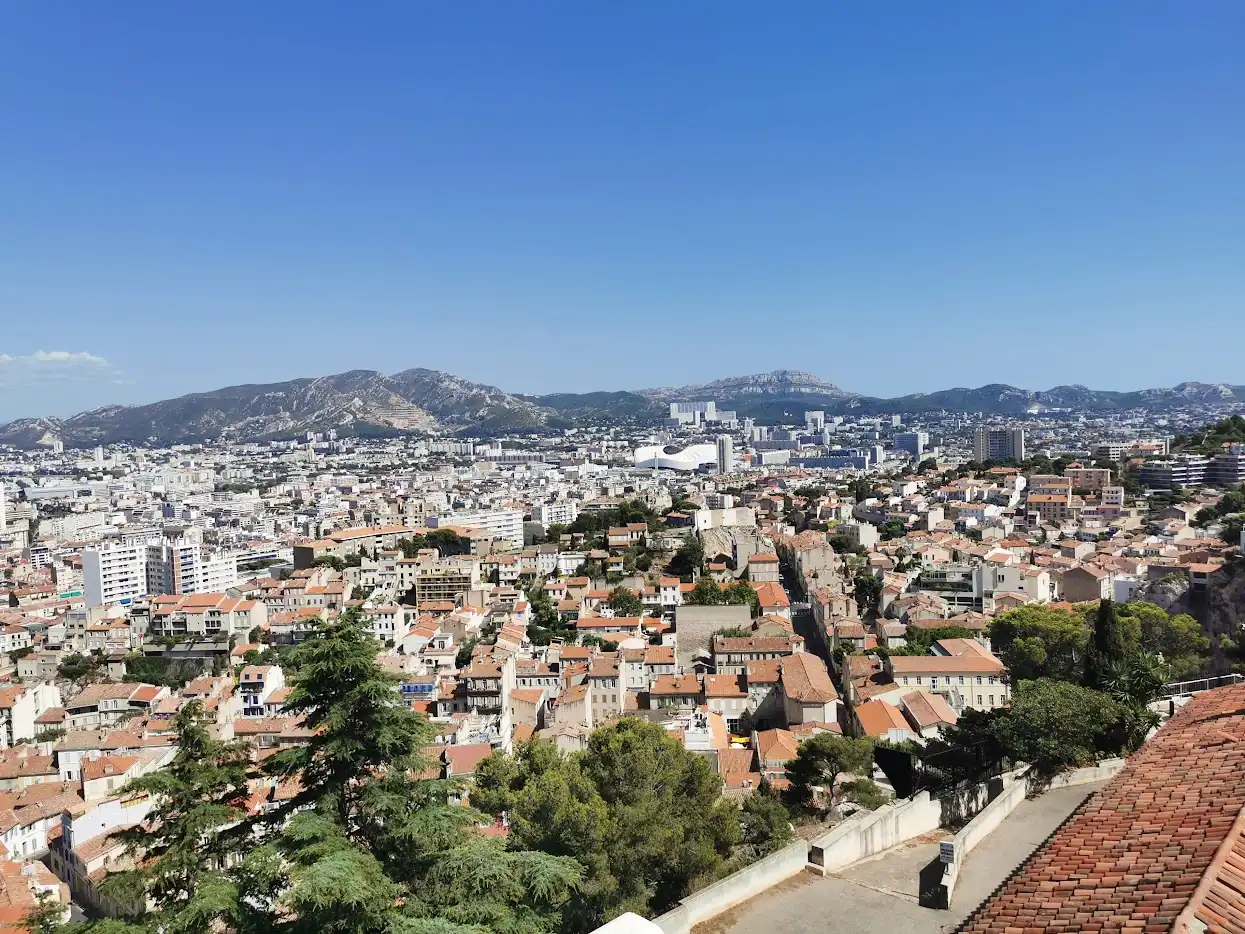
Every new website starts with a default “Hello World!” post—a digital cornerstone usually meant to test the database and then be swiftly deleted. As an architectural professional stepping into my own digital space, I decided to repurpose this placeholder. Instead of a generic greeting, let’s say hello to one of Europe’s most structurally layered and criminally underrated cities: Marseille. Marseille architecture is actually quite unique and i got to discover that over a week during the opening ceremony of Paris Olympics 2024.
While Paris dominates the French architectural discourse, my time in Marseille revealed a living laboratory of urban transformation, material innovation, and raw structural expression. Here is a look at the city’s architectural narrative, told through the spaces I explored.
The High Point: Structural Dominance at Notre-Dame de la Garde
I started my exploration by understanding the city from its most commanding vantage point. I went to see Notre-Dame de la Garde, which physically and visually anchors Marseille.
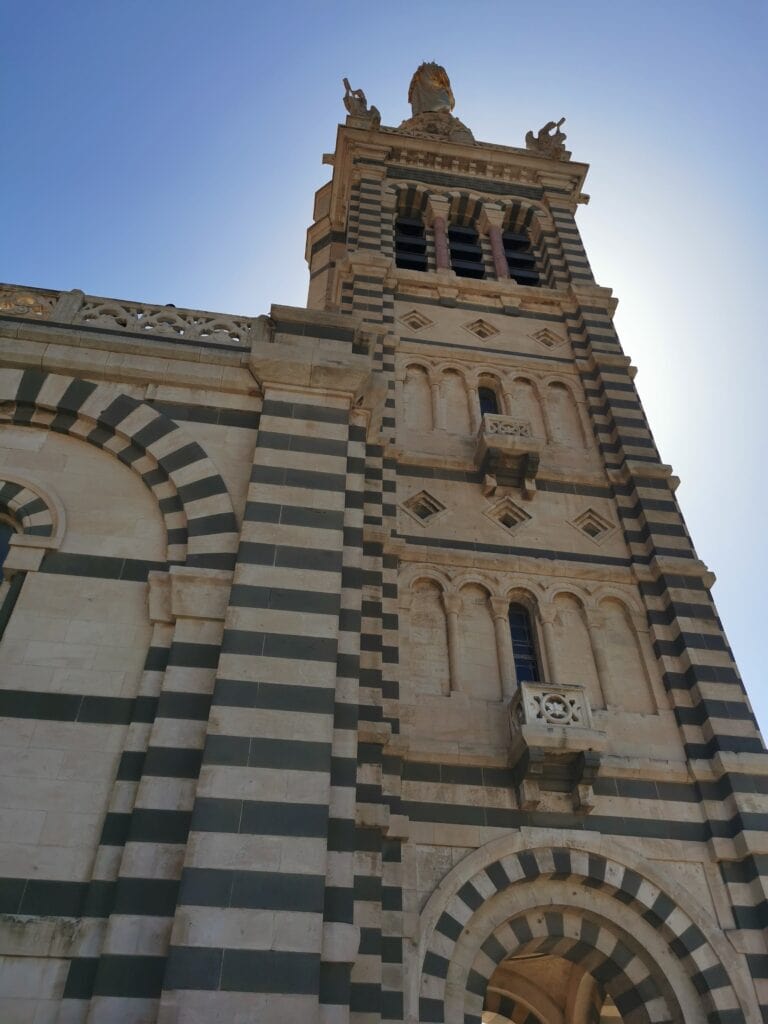
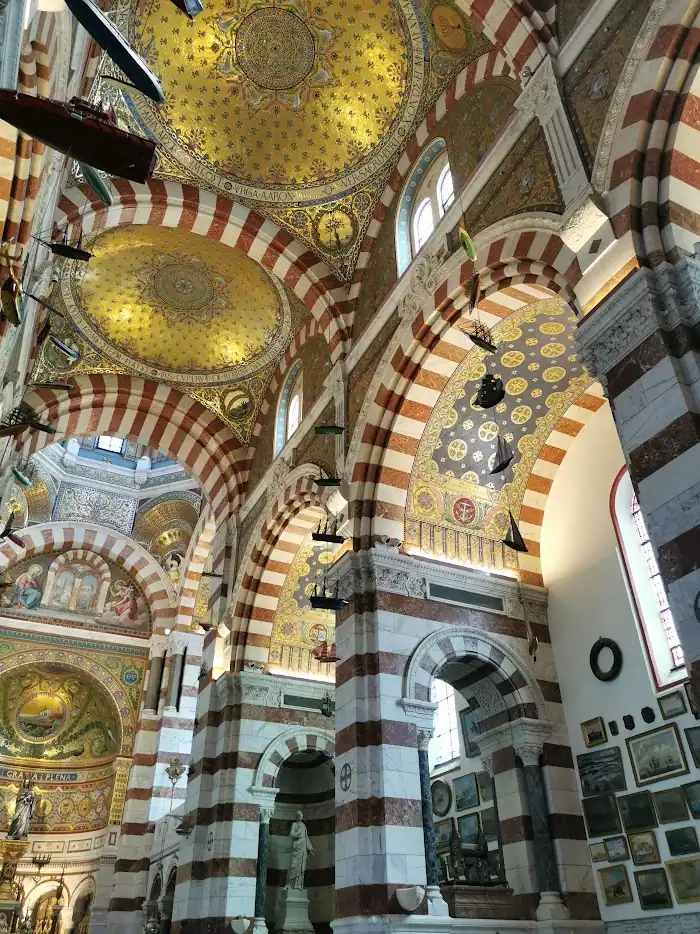
Designed by Henri-Jacques Espérandieu in the mid-19th century, the basilica is a masterclass in the Romanesque-Byzantine style. From a structural engineering perspective, the building is fascinating due to the sheer logistical challenge of its foundation—it is anchored directly into a 149-meter limestone outcrop. I took time to examine the striking polychromy of the facades. The deliberate juxtaposition of dark green limestone from Florence against white Calissanne stone creates a visual rhythm that breaks up the massive masonry volumes.
The Waterfront: A Dialogue of Stone and UHPC
I then went to see the city from the water, taking a boat out along the coast. Viewing a port city from the sea is essential to understanding its spatial logic and urban planning.
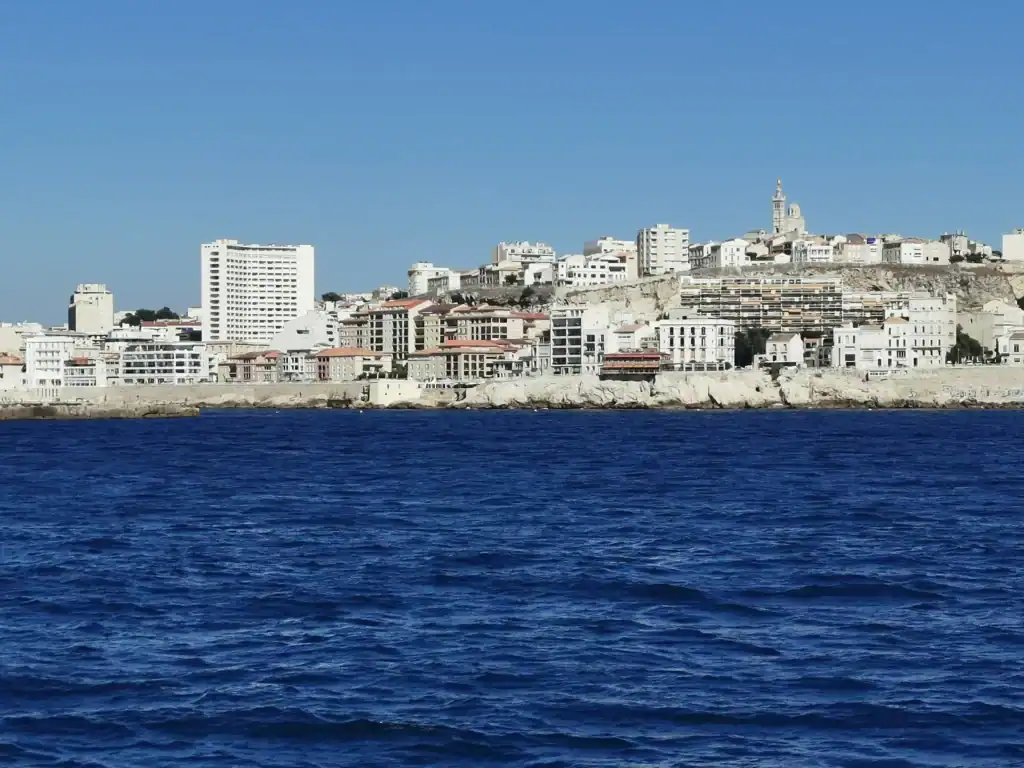
From the water, the architectural timeline of the city is laid bare. You immediately notice the stark contrast between the massive, impenetrable masonry of the historic Fort Saint-Jean and the ultra-modern, porous envelope of the nearby Mucem (Museum of European and Mediterranean Civilisations). Moving along the coastline, the dialogue between the raw, sun-bleached limestone of the Calanques and the built environment highlights how coastal topography dictates Marseille’s structural interventions.
The Masterpiece of Modern Tension: Orange Vélodrome
Later in the trip, I went to the opening football match of the 2024 Paris Olympics, where France played the USA. While the sporting event was historic, my attention was immediately monopolized by the colossal architecture of the Orange Vélodrome.
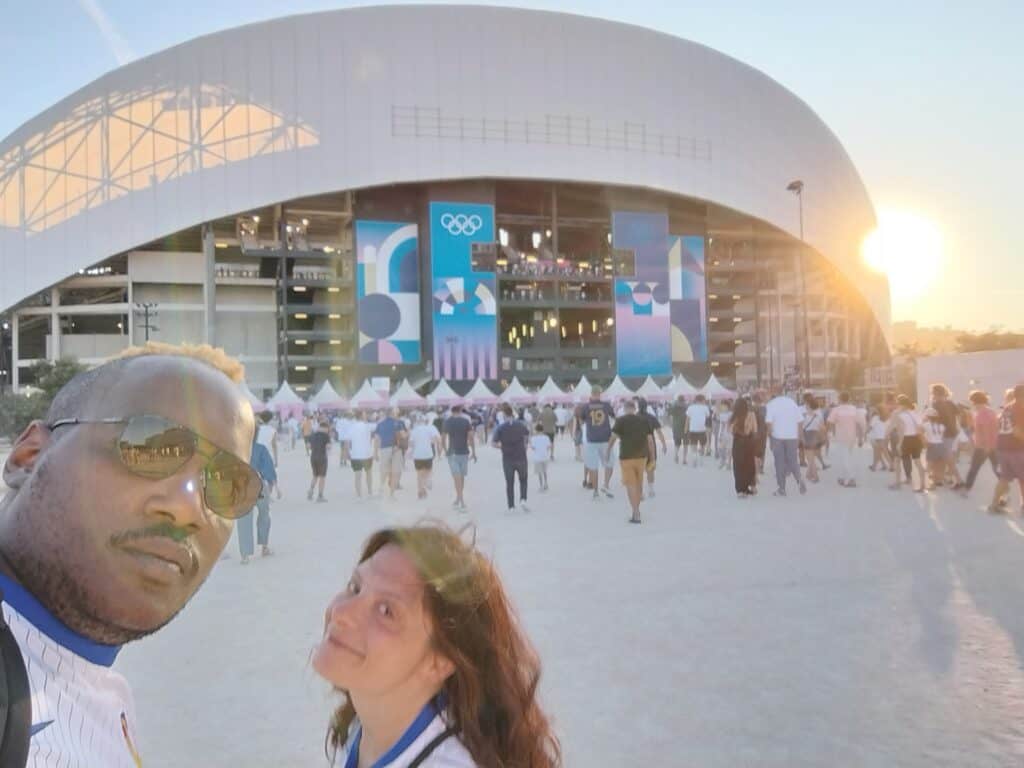
Originally built in 1937, the stadium underwent a massive reconfiguration led by SCAU architecture, completed in 2014. I studied the sweeping, undulating canopy that now defines the structure. As an architectural professional, seeing this roof system up close is staggering.
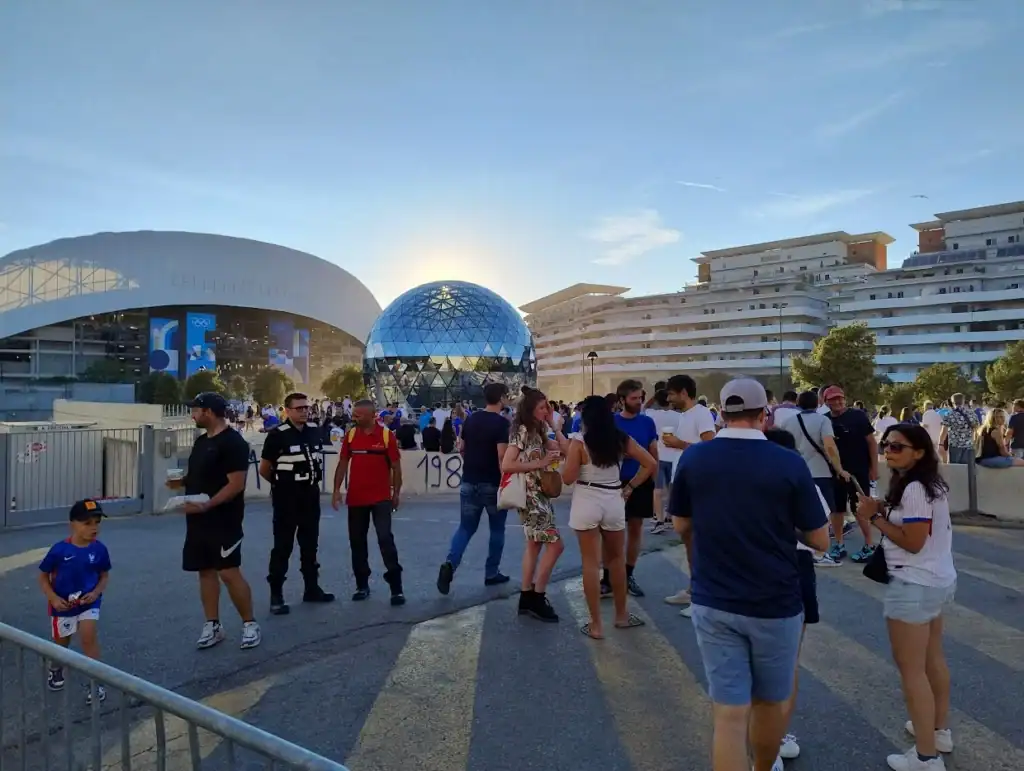
The roof is constructed from a translucent PTFE (polytetrafluoroethylene) fiberglass membrane stretched over a massive three-dimensional steel lattice. I found it brilliant how the canopy’s wave-like geometry isn’t merely an aesthetic choice—it is a highly calculated structural response. The undulating form aerodynamically deflects the fierce, localized Mistral winds that regularly batter the region, significantly reducing wind loads on the primary structure.
Furthermore, the continuous shell acts as an acoustic reflector. By trapping and amplifying the crowd’s energy, the architecture itself actively participates in the atmosphere of the stadium, rather than just housing it.
Beyond the Placeholder
Marseille is a city where 19th-century basilicas overlook cutting-edge parametric tension structures. It requires you to look past the surface and appreciate the engineering rigor required to build between the sea and the mountains.
This post might be a “Hello World” to my new site, but it is also an invitation to look closer at the built environment. Welcome to the blog.

Leave a Reply